

In my own journey from addiction into recovery, one of the things I’ve struggled most with is the practice of self-care. The notion I have no problem with, as it makes obvious sense and not just for recovering addicts either, but for all of us. But letting your self-care slip is a common feature of the recovering addict’s life and, more worryingly, a dangerous one, because the next step after losing sight of your self-care may be a relapse — with all the potential disaster and pain that entails.
First of all, let’s set out our terms. What is self-care? Whilst the writing would appear to be on the tin, even a quick Google provides a more revealing insight (the italics are mine):
1: the practice of taking action to preserve or improve one’s own health.
2: the practice of taking an active role in protecting one’s own well-being and happiness, in particular during periods of stress.
So the first obvious point to make is that self-care is an active thing, you have to actually do something in order for it to happen. Which is a drag, right? It can be sometimes but, as someone at rehab once pointed out to me, nowhere near as much of a drag as scouring the city at night for methamphetamine, heroin or whatever it is we enjoy poisoning our systems with. Getting the money together. Selling off your belongings. Shoplifting. Breaking into someone’s house and stealing their stuff to sell for cash. Having sex with strangers in return for drugs. You get the point. Compare this wretched lifestyle, to the onerous demands of self-care: a bit of ‘me’ time; 10 minutes of meditation a day; making sure you spend half an hour reading a book; having a cup of green tea; taking some light exercise, such as nice walk; sit in the sun (if there’s any available); have a bath with some relaxing salts and, the toughest of them all, drinking plenty of water every day. There are plenty of other examples.
I’m making light of it a bit here because, writing it down, it does seem ridiculous that some of us seem so determined not to do these pleasant, rejuvenating and seemingly easy things on a regular basis. I mean who wouldn’t want to do this stuff anyway? It is a tricky one to explain. In my own life, after leaving my first stint in rehab I immediately (and quite miraculously) landed a good job. Naturally, I was delighted and threw myself into it with gusto. Sort of workaholic-style. Warning Number 1, although I didn’t see it as such at the time. Secondly, the job itself was emotionally intense, in that it involved working with adult survivors of child abuse and wasn’t exactly the easiest to process. Warning Number 2, and my therapist from rehab was concerned that it might prove too intense for me, especially at an early stage in my sobriety. I was ignoring the obvious trait, shared with many addicts, of having an ‘all or nothing’ approach to life. Total abstinence, or raging alcoholism. Codependent love affairs that end in chaos, or celibacy. Workaholism and total commitment to my job, and zero self-care. The director of the rehab even called me a few times. ‘What are you doing about your self-care?’ ‘Erm, well I go for a coffee every day, have a nice walk and so on.’ This was treated with well-deserved scepticism as in reality it meant working all day until about 7pm, walking up to the nearest McDonalds, having a burger and an iced coffee, grabbing chocolate from the nearest 7–11, and going back to do some more work, before passing out pretty much in front of my laptop. Self-care, this is not. As this website notes:
‘It’s easy to confuse self-care with self-indulgent behavior. Self-indulgence involves little quick fixes that feel better temporarily. These are fine in moderation, and who doesn’t love a treat? But quick bursts of indulgence are not a sustainable route to health and happiness.’
Of course, as night follows day, after 9 months, I was confronted with a significant emotional setback and promptly had a major relapse with no self-care regime or established routine to fall back on for support. And so I ended up back in rehab and the cycle began again. So why do we do this?
1: Self-care is one of those things that is easier said than done, especially if it doesn’t already form part of your lifestyle and routine. Habits, as we know, are hard to break and if they don’t include self-care from the start, then getting them going can turn into a bit of a shoe-horning exercise, that’s easy to avoid or forget.
2: Self-care may not produce immediate results. Meditate for a week or so, and…meh. Meditate consistently for a month to six months and you’ll have a life-changing experience on your hands. Same applies to eating healthily or exercise. The first few weeks of your new jogging routine are going to be hellish. The gains and the comfort zone come after consistency.
3: It’s not a ‘one size fits all’ solution. Meditation works for me, for example, but it might not for you. Going to the gym works for a lot of people, but definitely doesn’t work for me. So it’s a question of experimenting, finding your space and thus letting it more easily into your life.
All these are reasons why people end up avoiding self-care on a day-to-day basis, but these could apply to anyone, addict or otherwise. But for addicts, I believe there’s a deeper, and harder-to-solve reason why we avoid these things that are so obviously beneficial to us. It’s because at the dark heart of our addict’s soul, we don’t believe we’re worth it. The childhood trauma, the self-loathing, the guilt, the hopelessness and despair that lie deep in our subconscious is still exerting its negative power over us, telling us, ‘You don’t deserve this’; ‘You’re not good enough for this’; ‘You hate yourself for a reason’, and ultimately, ‘Don’t even try.’
For this, there is, of course, no easy solution, as we have all found to our great cost. But I think we owe it to ourselves to see this dark thing for what it is, know it for what it is, and treat it with the defiance and contempt it deserves. If, like me, you hesitate to perform simple acts of self-care, take action today. Don’t join a gym, or aim to be a black belt in karate within two years, or book an expensive three-month yoga retreat in Thailand. Just get up, put the kettle on, make a cup of tea and sit with it, and with yourself, for as long as you need to. And then do the same thing tomorrow, or do whatever you want tomorrow, so long as it’s about you and the care and self-love that you so richly deserve.
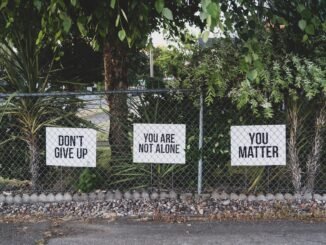
Photo by Anthony Tran on Unsplash



Be the first to comment