
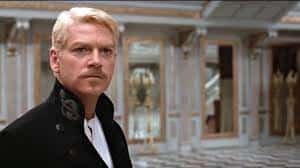
For in that sleep of death what dreams may come when we have shuffled off this mortal coil, must give us pause.
Hamlet, Act 3, Scene 1, William Shakespeare
For a lot of us, one of the notable side-effects of quitting drinking are the weird dreams that show up as our minds desperately try to re-regulate themselves, from chaos to some kind of order. As a general rule, I try not to set much store by dreams, in that I don’t go looking for hidden meanings or spiritual insights. But I think there is enough value in them to provide a useful backcloth to recovery. And perhaps also something else.
Some years ago, a psychologist told me that dreams were the mind’s way of providing a kind of subconscious problem resolution, a release valve, an explanation that made sense to me then, and still does now. This comes with the notable proviso that the psychologist in question was a mate – ‘Mike the Shrink’ – and the conversation took place down the pub. But still, I’m sure a lot of us would recognise what he was saying. I know for a fact that if daytime concerns are on my mind – job, relationships, money, whatever – they often play out, in surreal fashion, when I’m asleep and dreaming. Last year, for instance, upon entering rehab and becoming properly sober for really the first time in my life, my subconscious mind warped itself down many an odd and twisted path. One particular dreamscape saw me and a real life rehab buddy – a reformed bank robber, no less – dressed up as Droogs, complete with bowler hats, injecting ourselves with methamphetamine before going on to rob building societies in an anonymous British high street. With my daytime eyes, I saw the bank robber in question as quite an impressive figure. Someone who had done bad things in his life, but had chosen to reform himself by stopping taking drugs and curbing his impulse to run into banks with a sawn-off shotgun screaming at everyone to hit the deck. Nonetheless the fact of his undoubted wrongdoing clearly played on my mind. I make light of it here, but there’s no escaping the fact that innocent people were to some degree terrorised by his actions. I have less/no real concern for the financial wellbeing of the bank in question, but would agree with the general principle that it’s wrong to steal money from them. And yet there was something about this person I liked and trusted, and so my dreams – in their own odd way – gave me an outlet for those mixed emotions. Such is the nature of alcoholic problem resolution. My view is just roll with it and enjoy the scenery. No harm can come from a dream.
Further to this, there is also the question of creativity. The American author and poet Jack Kerouac – another alcoholic of course – saw dreams as an immense repository of creative insight and would make scrawling them down on paper his first task of the morning. No matter how exhausted, hungover or half-asleep, he would tumble out of bed, and write down the vivid, wild and erratic visions that had flashed across his night time mind. As an occasional admirer of Kerouac, and fellow alcoholic scribbler, I completely understand the need to create, but when it comes to getting out of bed early, then, well, I’m probably just going to let the dream linger on my waking mind, before slipping away gradually into the ether. Dreams come, they do their thing, they go. And I’m lazy. And, as an aside, Kerouac’s own published Book of Dreams is an essentially unreadable, stream of consciousness garble of random nonsense.
But I have another theory. In the famous quote that heads this post, taken from Hamlet’s mighty ‘To be, or not to be…’ soliloquy, William Shakespeare gave us a layered insight into the dream condition that defies even religious explanation. Much of Hamlet’s preoccupations are posed in the form of questions. Riven with self-doubt he torments his mind with suicide ideation, questioning everything about himself, yearning almost for an untimely grave and beyond, into the dreamscape of Death itself, but too afraid to make the leap. For Hamlet, and maybe Shakespeare himself, Death may not be the end, but only the beginning of another, eternal dream: for in that sleep of death, what dreams may come…?
Do I live or die? Is life itself just a dream? Do we dream when we’re dead? Or does nothing await us? Who even am I? This frightening wilderness of mirrors, a place of whispered, unanswered questions, brought so brilliantly to life in Shakespeare’s immortal prose, is the ‘undiscovered country’ of Hamlet’s nightmares, Death itself. Is that, then, what dreams are? A glimpse of our sleeping fate?
Of course, there is only one way to find out. In the meantime, the dreams call out to us every night, distant sirens from the undiscovered country that awaits us all.

Be the first to comment