
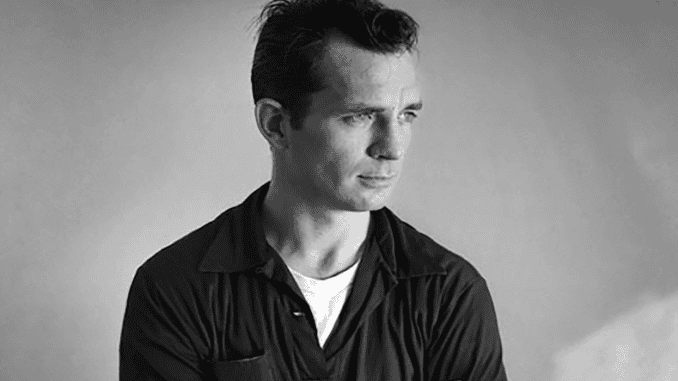
‘My witness is the empty sky.’
Jack Kerouac
People say to me, ‘Oh Nick, you should write a book, you’re very good and what with nearly drinking yourself to death and everything, it would be wonderful’. I sort of take the long view on all this. On the one hand I’m flattered, thank you, and yes I can see how all that might stack up. On the other, well, one hesitates. Tales of drunken derring-do always seem to end up in the gutter or the emergency room somewhere or other, and I’m not sure how keen I am on reliving all that. The fact that I relive it in these posts sometimes, and certainly in my memory, is different from a longer written form; a ‘drawing’, not in the pictorial sense, but as a bird slowly pulls the guts out from another.
As an example, I recall a particularly bad relapse that led me to collapse in a nearby doctor’s surgery, followed by a frantic whirl of action after the doctor had announced, ‘He’s unresponsive’, after which I think I must have passed out, or been in the process of doing so. Coming to, now with an oxygen mask on my face, I found the same doctor looming over me, urging me to look at him and hold on, and that he wasn’t going to let me die on his watch. This is obviously not your average drunkenness and is quite painful to recall, let alone write about, but there is some kind of catharsis in it as well. I don’t know. It’s a balance I’m still looking for.
From the get go though, this kind of thing has been a problem. I remember as a teenger, already troubled by the spectre of parental alcoholism, being obsessed with the stream-of-consciousness tirades of the alcoholic writer, Jack Kerouac. I can’t read that stuff anymore but I still love Jack and, worryingly, still reach for him as a bit of a role model. Kerouac had insisted that:
‘The only people for me are the mad ones, the ones who are mad to live, mad to talk, mad to be saved, desirous of everything at the same time, the ones who never yawn or say a commonplace thing, but burn, burn, burn, like fabulous yellow roman candles…’
Probably in the grip of some kind of amphetamine psychosis when he wrote that, Kerouac spent a good deal of his time writing and talking utter nonsense (and beautifully sometimes) but for me as a kid, it was gospel, and more of the bad news variety, than the good. Unable or unwilling to access the same kind of lunacy-inducing substances, I did the best I could. Most often this came in the form of cheap lager purchased illegally at the village off-license, or a once-only spliff in the nearby woods which had caused me to choke and turn blue, and renounce the stuff for life. Many and pathetic were the scenes, culminating – in my memory at least – with me rolling around in a piss and beer stained gutter in West London, as the Notting Hill Carnival thumped by unnoticed. This, for me, was the fast lane. To be honest, and despite various upgrades in salary and dress sense, it didn’t get a lot faster than that. Well, it did sort of. The consumables got better at least. A high point, as it were, came some years later as a magazine editor when I wrote a humorous feature ‘reviewing’ pub toilets around town. In a wholly irresponsible piece that should never have been published, but it was because I was the editor, I complained that it was intolerable that some of these facilities didn’t have locks on the doors, because how on earth was a man supposed to take his cocaine in comfort? Reading this, an old friend of mine recalled how he’d smiled and nodded approvingly. ‘That’, he affirmed, ‘Is the true voice of Nick Jordan’.
Aside from the anecdotes themselves, which are legion, as a writer, we can probably say that a moral can be drawn from it. ‘Do as I say, and not as I do’, or less hypocritically, ‘I did all this, no good came of it, I did better, and here I am today, shaken but intact.’ And of course, that is a perfectly good moral framework upon which one could hang a story.
But the time has to be right, and then was definitely not that time. Instead, I was more interested in simply being a journalist. I don’t write creative fiction and have never really been interested in doing so. I wrote a good short story once about a woman who has sex with dead people, which attracted some attention, but I kind of left it there for reasons best left unexplored. In any case, as with alcoholism, I’m now in recovery from this weird obsession with journalism, but the fact of it remains and it was this that led me to the writing of my first, and to date, only book.
My days of hyped up articles for magazines had passed, and whilst I kind of mourned them, I was happy to write whatever for money, in the way some journalists do. ‘Hacks’, I believe we are called. My earliest experience of on-the-job journalism had hammered home a valuable, if hard-nosed lesson: everything you write is done to a commercial brief, which is to say, in support of the advertising that surrounds it. Forget notions of creativity and lovely writing. Later on in the job, I’d parsed this into: ‘We exist simply to fill in the spaces between the adverts’, a thing which is as cynical and depressing as it is fundamentally correct. Some talented and lucky journalists do escape this trap and can write more freely, as I’d been able to do in the cocaine toilets of the past, but in truth most of us are part of a grinding corporate machine of one kind or another, churning out words to order.
So it was that I found myself working for a trendy-looking but deathly magazine that dealt with legal issues in the workplace, let us call it ‘Business Rocks’. I had already written a few features for them on matters relevant. They would supply me with a ‘tight brief’, an editorial noose of the type which strangled any attempt at creative leeway at birth, but made it easy at least for any half-savvy commercial writer to hack out the necessary 3000 words on smoking in the workplace regulations, working at height safety, or whatever godforsaken subject it was. A low point in all this came with a soul-destroying article on new government car parking legislation and what it meant for vehicle fleet managers of medium to large sized businesses. I don’t specifically recall banging my head on the desk at the arrival of this latest mission, but that’s pretty much where I was at.
But they paid well, much better than other jobs I’d had, and as the editor had said wearlily at my telephone interview, ‘I just want someone who can do the job, okay?’ I knew what she meant, and I was – for the time being at least – that someone. The work flowed in.
All this came to a head, when they asked me, would I like to write a book? ‘You’ve done a good job for us Nick, and we think this would suit you.’ Payment for this came in the form of royalties, a new experience for me and, whilst not guaranteed, promised greater riches than writing features, as indeed it proved. ‘How do we know if anyone will buy it?’, I asked. ‘We don’t for sure’, came the reply, ‘But we know the market, and they probably will’.
Be still my jaded heart, I cried, and took the plunge. ‘Yes, I’ll write a book for you’, I replied, followed by the wary question, ‘What is the subject matter?’
‘It’s a guide for retail professionals looking to lease commercial spaces in shopping centres. There’s lots of ground to cover, legal and regulatory, and we thought you’d be the ideal person for the job.’ Backhanded are the compliments of life. Anyway, priced at what I thought was the extraordinary sum of £110, it was intended as a one-stop-shop guide for people straining at the leash, to lease space (forgive these puns) in a shopping mall.
This was a long way from the cocaine days of yore, with fun articles bashed out in a frenzy amidst a bustling magazine office of wisecracks and smart-arsery. This was scheduled to take three months of just me, on my own in a home office, ploughing through interviews with lawyers, builders, architects, retail consultants, health and safety specialists and various others. There was a brief to work with and guidelines, but otherwise it was just a blank page and 30,000 words to conjure up. I accepted this task with an already weary heart.
Reader, there is little to nothing I can tell you about the process of ‘creation’ that followed. Interviews with experts were conducted, translated from jargon into plain English (the tricky bit) and rendered unto a page, in terms understandable to the ordinary person fascinated by the prospect of hiring retail space in a shopping centre. Only one anecdote from the process rises to the surface in the form of a couple of Mormon ‘Elders’, aged about 19, who knocked on my door somewhere near the end of this project. Desperate by now for human company, I tumbled downstairs from my eyrie to confront them. ‘Hi, would you like to come in’, I said too eagerly. ‘Erm, yeah sure, but we’re going round people’s houses and maybe you’d like this’, pushing some briefly-glanced pamphlet at me. ‘That’s great, so when you’re done please come back and we can have a cup of tea, okay?’ Looking afraid, they nodded and smiled and were never seen again. Such are the ways of the Lord.
Shamefully the exact title of the book eludes me now, but something like Leasing Retail Spaces in Municipal UK Shopping Centres, 2003-04, Vol 1, Ed 3, it came with my own picture byline (a murky monochrome photo), and a biography which glossed nicely over the entertainment and lifestyle garble I used to churn out, saying something like, ‘An established general journalist with a background in arts and business, Nick is also a leading contributor to Business Rocks magazine’. My mother, always a keen supporter of my writing efforts, who had swooned in delight at the sight of my first ever magazine byline, was delighted to hear that I’d been commissioned to write a real book, but then fought hard to stop the eyeballs rolling upwards in her head at mention of the title. ‘Oh that’s lovely dear’.
Anyway, to my astonishment people bought it, and the royalties stretched into the thousands at first, rapidly declining over a short period. I recall that my last cheque, about four years after publication, amounted to around 15 quid. My relationship with BR magazine didn’t last much longer than the submission of the final draft. I’d asked the editor what she thought of it. ‘It matched our expectations without exceeding them’, she replied pointedly. The writing was on the wall. Hacking out articles on the dryer aspects of business practice has a shelf life and mine had run out of date. Whatever one’s professionalism, a small part of the writer’s soul dies at the prospect of tackling this kind of stuff.
As far as first books go it wasn’t exactly On the Road, Jack Kerouac’s blistering first love letter to the ‘live fast, die young’ ethic that he had so fully embraced as a young man, and that was to claim his own life at age 47. But I’ve often thought that he would have been disappointed with the timing and manner of his own passing. 47 is a bit middle-aged after all, and Jack – bloated and blotchy with the effects of alcoholism – was no longer the beautiful young man of my teenage dreams. Instead he had drifted away, drunk, living with his aged mother and unsuitable third wife, Stella. A lifelong conservative and guilt-laden Catholic, Kerouac had died spitting venom at the ‘left-wing’ hippy counterculture that his writings had inadvertently spawned, killed by the cirrhosis that had burned his liver to ashes. As I was to discover later, drinking yourself to death is a slow and lonely business, achieved in measure, one painful drink at a time, quite removed from the supercharged rock ‘n’ roll deaths of the Kurt Cobains of this world, hypodermic needle in one hand, shotgun in the other.
For me, the worst was yet to come, but unlike poor Jack I pulled myself back from the edge. Or at least I think I did. ‘I have been half in love with easeful Death’, wrote John Keats, another writer who was to die young, and I’m lucky that the half of me that chose life, seemed to triumph over the half that didn’t.
The book that I wrote sits outdated and unremembered on someone’s shelf somewhere, no doubt. I don’t have my own copy anymore but I hope that it was read and found some use in this life. I was grateful for the royalties at least and I did my best by it. Business Rocks magazine is no longer published, and if I no longer dwell in a half-life of drab corporate writing, nor do I long for the ‘easeful Death’ that haunted me as a young man but then came back to nearly kill me in middle age. That’s what causes me to hesitate today, to write about something that lives in the darker corridors of my soul. I escaped it once, and to go back seems to tread on the creaking boards of an old and frightening house. But it’s there somewhere for sure. Half-hidden, half-written, spoken of but not fully said, waiting for a page that may never turn.
Nick Jordan

Be the first to comment