
WARNING: this article contains descriptions of drug and sexual abuse that some readers may find upsetting.
The subject of recreational drug use and addiction doesn’t often make it into my posts on recovery. The main reason for this is that I write on the subjects of addiction and recovery by drawing on personal experience, not clinical training. Any insights I have on these matters come from what I’ve lived through, the therapy that sustains me now, or what I’ve seen at first hand. With regard to drugs, things are a little different for me. Yes, I’ve taken plenty, more than anyone should even think about taking and they include everything you’ve heard of and a few you probably haven’t. I have at times, behaved very recklessly with such things, in ways that make me shudder to think of now, and I’m probably lucky to still be around to talk about it. And whilst it’s healthy to abandon regret and not dwell in the past, at the end of the day, it’s nothing to be proud of.
But whilst drugs have caused me some problems, they never became anything like the problem in life that alcohol was to become. Not even close, in fact. For me, life’s ruination was not found in a sinister-looking needle laden with heroin or cocaine, but in the liquor store on the corner, the bottle that sits in the fridge and the drinks taken down at the pub.
For this I’m grateful. The misery and destruction brought about by drug addiction, is of a type so dark and all-consuming and its victims exist in a state of such hopelessness, disorder and despair, that it may barely be called a life anyway. At its worst, everything of true meaning or value is taken from the addict never to return, with serious medical and mental health problems and death an ever-present threat. If the addicted person survives this godforsaken experience, and many do with therapy and support, some of what was lost may be regained, and a mostly normal existence resumed. But life will surely never be the same again. Nonetheless, there is hope. Research suggests that a third of people who engage in some kind of rehabilitative therapy, do recover. It’s felt that the remaining two-thirds only stumble or relapse because of non-compliance with the therapy.
That I’ve avoided these situations, sometimes I think by the skin of my teeth, is an ongoing source of relief, curiosity and dark amusement. That I then encountered them anyway, courtesy of legal and freely available liquor, comes laced with the kind of irony that makes you choke not laugh, but such is the nature of our bipolar and hypocritical relationship with substance abuse. Which brings me neatly to my point.
In 2009, the British drug charity Release, launched a bus poster campaign called ‘Nice People Take Drugs’. Soon beset by criticism from all sides, the charity withdrew the posters on the grounds that the public wasn’t yet ready for such a message. Whilst some of the nicest and most decent people I’ve ever met have also been drug users and addicts, I can see why this message might not work for a lot of people. ‘Nice’ isn’t much of a word in itself, but if we set it in the context of hard drug use and addiction then it flounders badly. For all its good intentions, a message like this, blaring down from buses across the land, seemed inappropriate at best.
However, Release are right in their general assertion, namely that perfectly decent people sometimes take drugs and that it’s counterproductive to demonise them. But that is the standard that society uses when it thinks about drug addicts. Everyone is familiar with the stereotypes I’m talking about, there’s no need to repeat them here. But drug users come burdened by the extra weight of moral judgement, as passed by a largely unforgiving society. Too lengthy to describe here, the background to and reasons for this kind of thinking are many and complicated, but the morality it produces holds a huge sway over the way we approach and deal with illegal drugs and their users today. So dependent on this way of thinking have we become, so ingrained in our nature is it, that the drug legislation of some of the most humane and medically advanced nations in the world is completely in its thrall.
‘Ah’, you may say a little wearily, ‘Here goes another argument for the legalisation of drugs’, and roll your eyes, either in bored, heard-it-all-before sympathy, or in disgust at the prospect of another dissolute person of poor moral quality, hoping to flood the streets with hard drugs, habituate the kiddies to heroin, and bring about the moral and physical collapse of late Western civilisation. Whilst the image of both these things amuse me, I’m here to suggest something different instead. This is an approach not rooted in traditional and binary notions of Legalise vs Criminalise, a mindset we desperately need to get away from, but instead in a shift in perception, both at individual and societal level, that might open the doors to a new way of thinking, unlocking addicted people, both from the prisons of society where too many of them languish, but also from the labyrinths of their minds, where they are doubly incarcerated, bound by iron bonds of memory and bitter experience.
The key to this new approach comes, perhaps paradoxically, via the notion of trauma. In my experience of working with adult survivors of child sexual abuse, a number of things became abundantly clear, but chief amongst them was the obvious prevalence of substance abuse and addiction amongst people who had endured childhood trauma of the most severe kind. Almost unimaginable to those who haven’t suffered them, it should go without saying that such experiences mark a person in a way that conditions almost everything about them, as they proceed through life. The human need and ability to form meaningful connections with other people is nothing less than our birthright, an evolutionary absolute required if we are to successfully thrive, adapt and survive; or put more simply, to live.
If, at an early age when our brains are still developing and not yet fully formed, that need for connection is violated or broken in some abrupt and fundamental way, it will never grow or work in the way it was intended. Frozen, as if in amber, at the moment of violation, the development of this key emotional process stays exactly where it was stopped, locked in place as the body that hosts it grows to maturity. Damaged, hidden and undeveloped this key evolutionary need remains quite unprepared for the important task it has at hand. Devoid of this connection, or with only a broken version in place, those marked by it struggle to make friendships or meaningful connections of any kind. Untrusting of others, beset by false guilt, and fired by raging anger and a rightful but dangerous sense of injustice and resentment, such people face an enormous challenge when it comes to operating successfully in a society that they have already started to hate. Sexual or romantic relationships, already ordered by biology and vital to our emotional wellbeing, can be disrupted to such a degree that they may never happen, or when they do, become a source not of love, pleasure and procreation, but of humiliation, inadequacy and bitter personal regret.
Damaged in such a way and host to an emotional void, these badly traumatised people turn to the usual means for some kind of relief. Anger at society, may turn quickly into crimes of violence, reckless behaviour and destruction as they lash out at symbols of the authority that failed to protect them. The law and its officers are disrespected, along with authority figures who might have been able to help, whilst parents become figures of disdain, again attended by resentment, however unfair, that they weren’t there at the moment their child most needed them. Soon this state of mind, if it hasn’t already, can lead to serious substance abuse, as the victim resorts to intoxicants that, for a while at least, provide relief from emotional torment, physical exhaustion, intense feelings of anxiety and depression and the urgent need that society places on us to always be present and correct. Abusing these substances, be they alcohol or drugs, is never a good idea, but the people we are talking about are often very young, in their early teens sometimes younger, who are not physically or emotionally ready for the effects of substance abuse. Inject heroin at any age and you perform an act of dangerous self-harm, that will likely bring only ruin and sadness to your life. Inject it at age 12, and the scale of that disaster becomes immeasurable.
Dabbling in these very more-ish but decidedly illegal drugs, also brings the victim into the realm of the criminal, and accompanying attention of the police, the courts and the punitive methods they employ. The overwhelming majority of the abuse victims I spoke to were either in jail at the time, had experienced it at some stage, were headed back there, and had extensive criminal records blighting their ability to get jobs and get on in society, and that do great harm to notions of self-esteem and worth. The law does not, in reality, accept as mitigation the argument, often difficult to prove anyway, that a person who endured childhood trauma should not be punished for their own crimes later on. Raped as a child but injecting heroin and robbing banks as an adult, still makes you a drug addict and a thief in the eyes of the law and of society.
Caught in a spiral of addiction, poverty, criminality and cripplingly low self-esteem, with few or no connections to rely on, an entire subset of society has become mired in abject hopelessness of a type few of us can imagine. These are not the conditions for recovery and renewal, either for the individuals concerned, or for society as a whole. Objections to this line of thinking tend to include statements such as, ‘Not all abused people go on to commit crime’, or ‘We all still have personal responsibility for our actions’. Less reasonably, but worryingly prevalent, is the often heard cry of, ‘It was a long time ago, just get over it’. None of these objections bear up to much scrutiny. To address them in order, firstly, no because we’re all different and react differently to certain situations. To put it bluntly, some people cope better with being raped than others. But is that really the measure we want to judge traumatised people by? Secondly, yes we do have personal responsibility, but the conditions under which we are able to exercise that responsibility vary wildly and again come informed by experience. Further to that, what is and isn’t considered responsible may be a matter of personal choice, informed by context and all sorts of things. For the emotionally disordered person, raised in a way where responsibility was never responsibly taught, it becomes nigh on impossible to tell that difference between what is a safe choice and what is not. Third, the ‘get over it’ mob are so far beneath my contempt that it’s hard to address them seriously. Needless to say, one does not just ‘get over’ serious trauma of any type. However, a person can, with help, learn to live with it and achieve some measure of happiness and fulfillment.
If we add to the list of the sexually abused, which is much longer than we can even dare to imagine, trauma of all sorts abounds in human life, influencing addiction and posing a very real threat, both to those who suffer and those around them.
So what is to be done? It begins, I think, with the shift in perception I mentioned earlier. This may not always be a straightforward matter, being ostensibly simple in principle, yet complicated in practice. We cannot just expect everyone to change their minds on a thing, taking a leap of faith from one set of values into another. But we can ask, and make an appeal to our common humanity.
On another level, we can begin an organised society wide program of education, whereby beliefs and understandings can be reframed in such a way, that where once we saw a thing as harmful and negative, we can now see the human context of the situation more clearly, and with that, an understanding that things can be improved. For instance, if we stopped seeing drug addicts as criminals to be punished, but instead as patients to be treated, then already we open up a new world of possibilities and understanding. If we stop judging drug addicts as self-indulgent losers, but instead as traumatised people who may have endured unimaginable horrors, and are simply seeking relief from that, then we’ve made a big step forward in re-establishing the connection that they and their families so desperately need. By de-criminalising the possession of drugs, particularly those held by heroin or meth addicts and similar, then we remove a large section of this underclass from the bonds and stress of criminality, and go some way to restoring both their self-esteem and general respectability. If we legalise heroin, so that it can be prescribed by community doctors to addicts, then we are able to oversee and regulate its usage, placing patients in the hands of medical safety and therapy, and removing them from the supply lines of criminal gangs. In doing so, we are implementing a program of harm reduction, alleviating the risk of deadly infections, overdoses and death. If we invest in community and domestic programs that allow people to establish meaningful connections outside of the world of drugs, and employment initiatives that allow people with drug convictions to find work, we not only restore people to the workplace (with attendant tax revenue) we enable a fundamental shift in the way society approaches this entire problem.
For all this to happen, a huge nationwide scheme of top-down investment, ‘Big Government’ if you will, is required. The private sector will need to play its part too. Some people won’t like the political implications of that, but we are way beyond the point of ideological bickering. Nearly all Western societies are now beset by the scourge of drug addiction, which incurs huge costs to both its economies and its people. The time to act in a co-ordinated, radical and humane way has long since passed, but there is still time if we act now. Don’t believe me, look at the example of an advanced Western nation who in 2001, finding themselves in a state of drug abuse freefall, enacted the kind of scheme I describe above. Seen as nothing less than a program of national salvation, Portugal’s ‘Strategy for the Fight Against Drugs’, radically overhauled its entire approach to addictive drugs, focusing not on law enforcement and punitive legislation, but on harm reduction, decriminalisation, medicalisation, education and therapy. With space limited here, I’ll leave those interested to google the matter, but the results of the Portuguese strategy have been transformative, constituting an act of humane deliverance to untold millions, and the way forward for an entire nation.
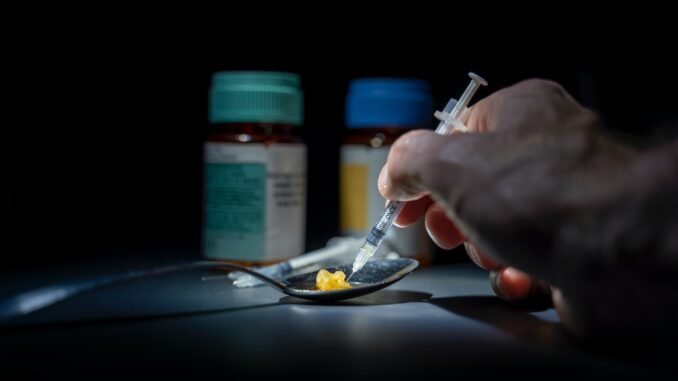
It will take resolute campaigning and ongoing public debate, conducted in a spirit of reconciliation not anger, to move these matters forward at a national level. But on an individual level, in our homes and in our hearts, we can start today, this minute in fact. We can make a simple choice. We can choose to see addicts simply as people, just like ourselves, with problems as real as diabetes and cancer that can be addressed by medical care; we can choose to see drug use, not as an act of selfishness, but as a thing informed by potentially devastating experiences. No one who is truly happy puts a hypodermic needle laden with powerful narcotics into their veins. We can choose to acknowledge that reality, even if we don’t fully understand it. We can choose to recognise and embrace the fact that meaningful and loving connections with other people are a fundamental requirement that we all share, and that with it comes an answer to many of the problems, not just addiction, that beset society.
We live, more than ever, in a world of fast judgments and misunderstandings, fuelled in part by an overwhelming surfeit of information of a type that brings with it little wisdom. But none of this should affect our common values or basic humanity. It’s no exaggeration to say that drugs such as heroin and methamphetamine have brought large sections of the world to its knees, morally, economically and physically. The answer to that doesn’t lie in the world of judgement, enforcement or recrimination, but in the world of understanding, forgiveness and simple human connection.
The word ‘perdition’ means ‘eternal damnation’, and is generally used in a religious sense, but in my view it exists in our own world now, with all that implies. We can choose to ignore the voices of experience and pain and stay on our current path, a Road to Perdition if ever there was one. Or we can choose, right now, to make a small change in our own understanding, and in so doing begin, one day at a time, to change the world.
Nick Jordan
Photo by Michael Longmire on Unsplash

Be the first to comment