
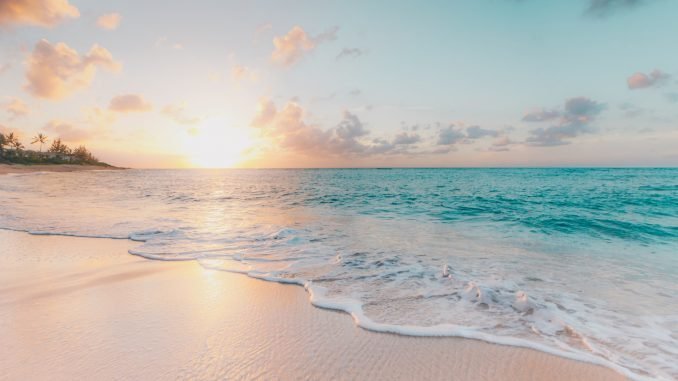
‘In the midst of winter, I found there was, within me, an invincible summer’.
Albert Camus.
Around about this time last year, Australian winter, I was homeless and living rough on the southernmost streets of the Gold Coast in Queensland, which rest on the border of northern New South Wales. My stomping grounds – and believe me, I did plenty of stomping – were towns and suburbs such as Kirra, Coolangatta and Palm Beach on the Queensland side, and Tweed Heads on the New South Welsh bit, which directly borders Coolangatta. Being border towns ‘Coolie’ and Tweed Heads are of course joined at the hip, the latter being the evil twin to the former. A sort of Jekyll and Hyde of towns: one bright, sunny and beloved, the other dark, ugly and pretty well despised, and yet both inextricably linked.
What this meant for me on the ground, was that somehow or other the uglier twin, Tweed Heads, was kind of better for homeless people. Border towns being as they are, distinctions could certainly blur but as a general rule it held true. Coolangatta, with its golden beaches, rich tourists and Gold Coast marketing clout, radiates sunshine and dollars, whereas grimy, seedy Tweed with its deserted parking lots, grey streets and utilitarian buildings, breeds an entirely different kind of city vibe. It’s the kind of place you don’t go unless you really have to, and you can rest assured that any tourists you see there have become lost. More than once was I put in mind of China Miéville’s mind-bendingly brilliant alt-reality novel The City and the City, which sees two entirely different cities exist together in the same space, whilst held firmly apart by rigid, unspoken laws.
That I’m fonder of Tweed Heads speaks both to my own longstanding predilection for the seamier side of life, but also for the simple reason that I could find more shelter there when I needed it. Either way and however you want to look at it, the wind blows colder somehow in Tweed Heads, and I mean that literally as well as figuratively.
But wherever it was that I lay down and called ‘home’ for the night, the fact remains that none of it was very easy – in fact it was the hardest time of my life, by a long and pretty desperate measure. But I’m not here to cast my mind back over my misery or, worse, elicit sympathy for it, but instead merely to say this: I endured – and if I can then so can anyone. I endured via a mixture of personal resilience for sure, combined with an absurdly Panglossian world-view, the existence of which defies even my own explanation and – absolutely critically – with the help of other people.
The help I received from others, both friends and strangers, saved my life, no doubt about it and the gratitude I feel for that has kind of taken on an almost transcendental quality in my mind that, by definition, is hard to fully express. But I wanted to focus here on the resources that lie within us, because I think it’s the case that we all have more of those available than we may realise. One reason we may not fully understand how strong we are, or can be, is because hopefully we never have to find out. It’s a different level of extremis altogether, but I’m put in mind of the generation who fought the Second World War. History has sentimentalised them (particularly in the United States) as the, ‘Greatest Generation’, but I’ve also seen them characterised as the ‘generation who lived through the greatest times’, a more clear-eyed assessment. However it was, few would doubt the general truth that, when confronted by a terrifying and unprecedented historical challenge, the young people of the war generation rose quite magnificently to the occasion. One imagines the quiet, untroubled, unexceptional lives that many of them would have led, had the war not cast their fates as it did. Quiet civil servants became brilliant generals, women who may have simply married and kept a house while husband went to work, became daring spies parachuting behind enemy lines to blow up power stations, and ordinary working men hit the beaches at Normandy and a thousand other battle sites, with the ferocity of demons.
Mercifully, few of us will ever have to make such choices or face challenges of this magnitude, but the fact – or maybe it’s just a feeling – remains, that we’re stronger than we think we are. Call it evolution if you will, but we have within us an iron will both to survive and adapt to changing and challenging circumstances. That we may not often draw on that strength is neither here nor there, because me – and plenty of others like me – are here to tell you that it does exist. Which isn’t to say that recovery, because that’s what we’re talking about, won’t be painful and you won’t endure setbacks, failures and doubts – you will, there’s no doubt about it. To continue our war analogy, our heroes from that time, for all their courage and resolve, hardly escaped unscathed. But regardless, we owe it to ourselves, if we are able, to pick ourselves up and keep going. And I don’t say any of us lightly. I recall one of my first therapy sessions many years back, the counsellor told me that, for some people, it simply may not be possible to just pick up and carry on, and I think that is very wise. Sometimes, and often with tragic outcomes, it just can’t be done.
But as one of my heroes, the great French writer Albert Camus noted in the words that grace the top of this article, even in our darkest moments, and if only we can summon it, we have within us the nurturing heat of survival and endurance, an endless repository of warmth that awaits us, as the hardest of cold winters turns, as it always must, to an invincible summer.
Nick Jordan



Be the first to comment