
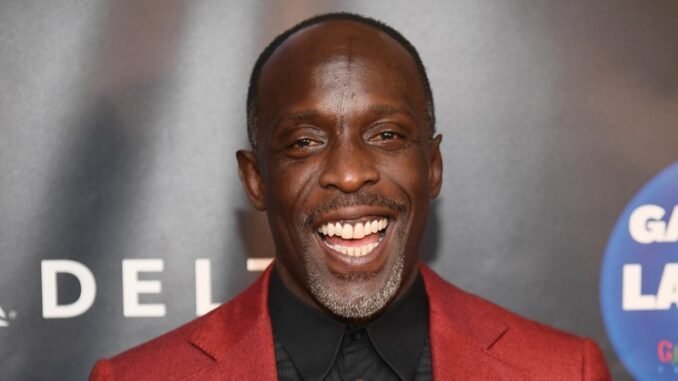
The tragic death of the actor Michael K Williams, seemingly as the result of a drug overdose, throws into stark relief a question many, if not all, addicts have asked themselves at one point or another: ‘Will this ever end?’ In fact, Williams had answered this question himself in 2017, telling the New York Times: ‘Addiction doesn’t go away. It’s an everyday struggle for me, but I’m fighting.’
In these words, Williams was reflecting the sentiments of many addicts who, having engaged in a recovery process of some kind, still find themselves on the lookout for the rest of their lives. The addict’s famous maxim, ‘One day at a time’, is a lived and often deeply uncomfortable reality for many, as is its dark shadow, the ever-present threat of relapse. To his great credit, Williams had spoken openly about his struggles with addiction over the years, an act of some courage in an industry where people often prefer to hide these things behind the laser-white veneers of fame and wealth.
Opening up to others about your problems is a tried and tested way of overcoming difficulties, but in itself it’s often not enough, and to a large extent I think this comes down to the addict’s unsettling ability to be two ‘versions’ of the same person. I’m not talking of anything as clinical as a diagnosis of dissociative identity (or ‘multiple personality) disorder, but there’s a sense of it being somewhere on the spectrum. To put it as plainly as I can, addicts often exhibit a peculiar genius for saying one thing (even to their therapists), whilst doing quite another. This is often done with a sense of earnestness and sincerity that may see the addict even start to believe their own lies, or remembering past events in line with the false narrative and not the actual, real-life thing. The pitfalls of this coping strategy hardly need spelling out, leading to the addict living two different lives, caught in a web of deceit and self-delusion that will, at one point or another, unravel with potentially disastrous results.
Now I can’t say with certainty that this is how Michael Williams was living his life, but it certainly seems to have played its part. In a revealing interview with New Jersey publication, nj.com in 2012, Williams talked candidly about exactly the kind of double-life confusion scenario I have in mind, where he was finding himself, an outwardly respectable actor, playing the dangerous, drug-dealing gangsta Omar Little in HBO’s hit show The Wire, then scouring the wrong kind of streets at night looking for cocaine, and hanging out with people who really were like Omar, and carrying real firearms and bad attitudes, not the props and postures used by actors in their day jobs. Williams said of his double-life:
‘Eventually, I got so sick and tired of this charade. No one who was in my circle, who knew me as Mike, was allowing me to get high. I had to slip away to do drugs. I had to hide it. I’d be gone for days at a time. I was lonely in that part of my life. I was broke, broken and beat up. Exhausted. Empty. I finally said, ‘I can’t do this no more.’ I didn’t want to end up dead.’
Stating that he was suffering from ‘a huge identity crisis’, Williams went on to admit that he eventually felt more comfortable being a fictional character: ‘In the end, I was more comfortable with Omar’s skin than my own. That was a problem.’ A big problem indeed and one compounded by the habit of passers-by calling out ‘Hey Omar’ to him and, not least of all, by the fact he was an actor, adept at convincingly portraying people who don’t really exist.
In my own struggles with addiction, I employed the ‘two mes’ strategy to some effect, and with some aplomb too, again to the extent that I started to confuse confabulated events with real ones and am still unsure if certain memories weren’t just fabricated excuses or real events. In the middle of all this I had a small but telling epiphany whilst reading The Strange Case of Dr Jekyll and Mr Hyde, which caused me to gasp out loud on a number of occasions, not in fear at the creepy moments, but in stark recognition of the dangerous and insidious double life being led by friendly and popular Dr Jekyll. It was like reading a description of my own life and the worryingly convincing modus operandi I employed, occasionally catching glimpses of the beast within, and then promptly covering his tracks.
In his terrifying and dauntingly brilliant portrayal of addiction, The Man with the Golden Arm, the author Nelson Algren draws another, and somehow more disturbing, picture of the addict’s two-person nature. The eponymous hero, is the book’s protagonist, Frankie Machine a card dealer to illicit games and morphine addict, the ‘golden arm’ referring to both his skill as a card dealer and his dangerous habit of injecting himself with opiates. Sinking further and further into a place of psychological darkness and fear, Frankie eventually starts to characterise his addiction as a ‘35 pound monkey on his back’, which soon transforms itself into his terrifying alter-ego Sgt McGantick, a shrivel-faced monkey creature dressed in a parody of an army uniform, who appears in Frankie’s life staring at him soundlessly from the shadows, or discovered hanging lifeless in cupboards and various hidden corners. These nightmarish images, which Frankie desperately tried to ignore, exist at the centre of his delusion and desperation as he tries in vain to seperate the real man into the lifeless monster that he is, in fact, becoming.
I think all addicts have in their own way experienced some form of this. Personally I never personified my addiction in this kind of way, ‘a monkey on my back’, seeing it more as two shades of the same person. Either way, the sense of not fully knowing who or what you are, is destabilising to the point of madness. As Algren says of another addict in the book, Drunkie John:
‘He was simply a man who didn’t know what to do with himself, for he didn’t yet know who he was. It’s sometimes easier to find a job than to find oneself.’
If I can see myself in that description, then I wonder if Michael K Williams would have seen himself in it too, for although the anecdotes of addicts may vary, the nightmare at the heart of it is very much the same.
At the end of the feature about him in the New Jersey publication, nearly ten years ago now, there is a note of redemption. In fact the whole article is angled around the notion that Williams has finally come to terms with his demons. Visiting some children on a hospital paediatric ward, one of the kid’s mothers shakes his hand gratefully says, ‘Where do I know you from? Who are you? Are you a TV star?’ Grasping her hand, her says: ‘I’m Mike. Just Mike.’
Whoever he was, Michael K Williams, a vividly brilliant actor and much-loved friend, who ingrained himself onto the consciousness of millions of viewers, was someone for who addiction didn’t just go away, as he rightly predicted, and finally caught up with him, as it does with all addicts unable to escape the agonising contortions, personality divides, deepening falsehoods and needless self-loathing that are its terrible hallmarks. I hope Mike, just Mike, has found some peace from what I know to be a condition of almost unbearable psychological pain, but if he has, then he has done so at a price which passes all understanding.
Nick Jordan
Photo: Dimitrios Kambouris/Getty Images




Be the first to comment