
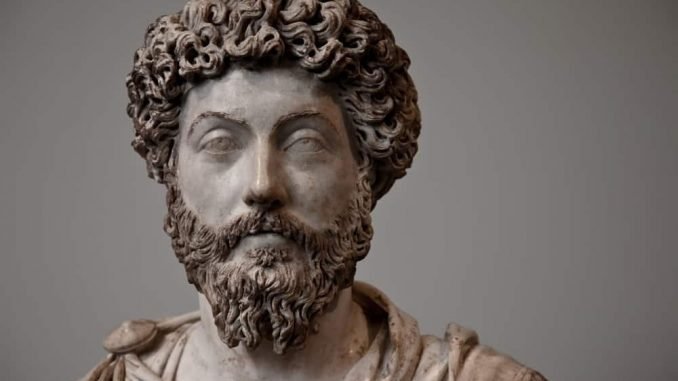
In the meantime, cling tooth and nail to the following rule: not to give in to adversity, never to trust prosperity, and always take full note of fortune’s habit of behaving just as she pleases.
So said Seneca, another of my Stoic favourites, and how right he was. It’s probably a cliché to say that none of us truly know what’s going to happen tomorrow. We don’t right? For sure, we may have plans (or not, doesn’t matter), and it’s not unreasonable of us to expect that tomorrow and the day after, will unfold more or less as the many that have gone before. But one day, and this I can guarantee you, at least one of your tomorrows will be very different from the others. To be brutally frank, something terrible is going to happen in your life, if it hasn’t already and, if it has, probably will again.
Given all that, it behoves us to ask how we might deal with such matters when they arise. I was talking to a friend recently, and mentioned a job loss that I’d endured, a thing I described as, ‘devastating’. He pulled me up on this and asked, ‘Is it really though? Is devastating the right word?’. He went on to suggest that perhaps only two things in life could truly be described as devastating: a very serious medical diagnosis, and death itself, either your own or that of a loved one. A job loss, on the other hand, is just that. I mean, you can get another one, after all. Naturally, I was outraged by the temerity of this. As the only invaluable employee on the planet, and imbued with a Messiah complex, how could this possibly happen to me, etc and so on. How quickly we forget that the graveyards are chock full of indispensable people.
But of course, he was right and truth be told it didn’t take me long to reframe the matter in mind, and see the job loss for what it was, which seemed to me to be a twofold thing: 1) a setback, and 2) an opportunity. And this is what you might properly call a ‘Stoic response’. Yes, we recognise the fact of setbacks, failures and unforeseen obstacles. All these things are real and they hurt. We wouldn’t be human if we didn’t feel the wind taken from our sails for a moment. But also yes, we take a breath, consider our response, and proceed accordingly, full of the knowledge that we are not, in fact, devastated, but instead fully in control of our faculties and wit, and able to turn disadvantage into some kind of favour.
None of this however is necessarily easy. A Stoic response to a setback may not be our first response, quite the opposite in fact. But the point is, we can learn how to respond in such a manner so that when the next emotional freight train comes hurtling around the corner, we are in some measure prepared. And you can start this right now, by picking yourself up on the many minor (hopefully) setbacks that may occur on a week to week, or even day to day basis. Make your response a choice, not a reaction. Look at what has happened, take a step back, and consider – literally in that very moment – what you’re going to do next. Outside of those instances where we have genuinely lost control of our emotions, which I’d suggest are rare, we nearly always have a choice as to how we’re going to react to any given thing. We can, in the moment, reframe our thinking to consider other responses, other pathways, other openings. Not every slip up is a route to advancement necessarily, but they can prove a useful training ground for those events which truly are of a magnitude to be feared.

Be the first to comment